
Westville to Paradise Valley – B0169 Bridge Jacking
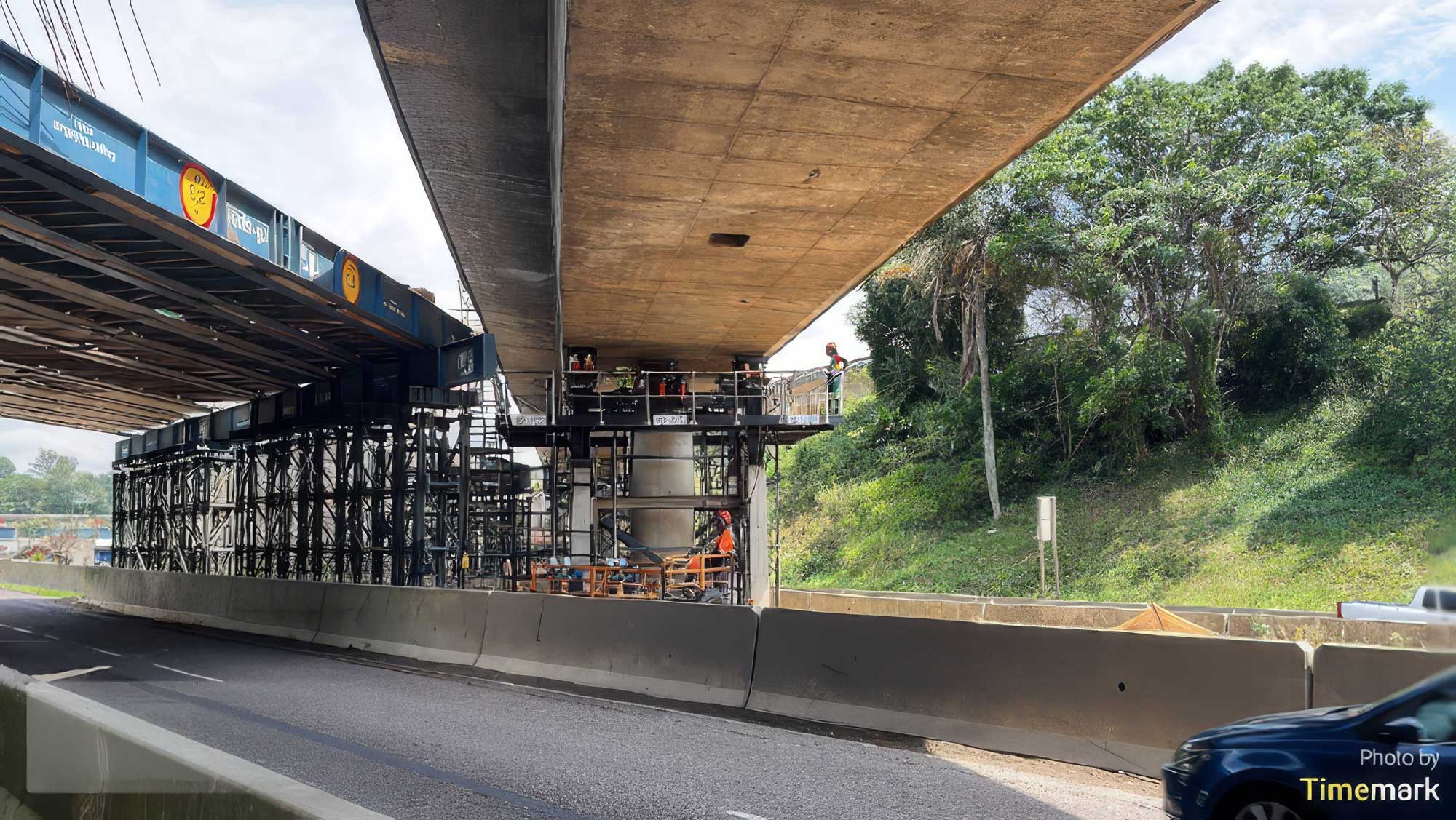
Bridge B0169 is the off-ramp from the N3 westbound carriageway onto the M13 westbound at the Paradise Valley interchange. The vertical clearance below the bridge deck had to be increased from 5,06m to a minimum of 5,2 as per current SANRAL standards.
PROJECT OVERVIEW
- Project: Capacity Improvements on National Route 3 Section 1 from Westville Viaduct (Km 11.80) to Paradise Valley Interchange (KM 17.50).
- Client: South African National Roads Agency Limited (SANRAL)
- Main Contractor: Aqua/EXR Joint Venture
- Project Engineers: SNA Civil & Structural Engineers
- Specialist Subcontractor: Post Tensioning & Structural Solutions (PTS-S) in partnership with Struttura Consulting Engineers (South Africa).
Bridge B0169 is the off-ramp from the N3 westbound carriageway onto the M13 westbound at the Paradise Valley interchange. The vertical clearance below the bridge deck had to be increased from 5,06m to a minimum of 5,2 as per current SANRAL standards
The existing bridge consists of a post tensioned prestressed concrete box girder with cantilevers supported by 4 piers on spread footings. The abutments comprise reinforced concrete spill-through type abutments founded on spread footings.
PROJECT TEAM & COLLABORATION
Delivery of the jacking operation relied on close, coordinated collaboration between four parties, each responsible for a distinct part of the temporary works chain:
Main Contractor — Aqua/EXR Joint Venture: overall construction management and sequencing of permanent substructure works around the jacking programme.
PTS-S (Post-Tensioning & Structural Solutions): specialist subcontractor responsible for temporary works design, jacking system installation, and execution of the jacking operation.
Struttura Consulting Engineers (South Africa): partnered with PTS-S on the temporary works design and engineering verification.
Greenhouse Construction: fabricated and installed the temporary bracing towers and jacking support platforms on site, in accordance with the approved temporary works drawings.
This close coordination between contractor, designer, design-partner and fabricator/installer ensured the jacking system was engineered, built, and operated safely while the bridge remained under live traffic.
TEMPORARY WORKS DESIGN
Temporary works for the jacking operation had to account for:
- Live traffic loading on the bridge during works
- Construction loading from ongoing substructure modifications
- Wind and lateral stability effects
- Load redistribution during jacking and lowering sequences
Temporary Structure at Each Permanent Pier
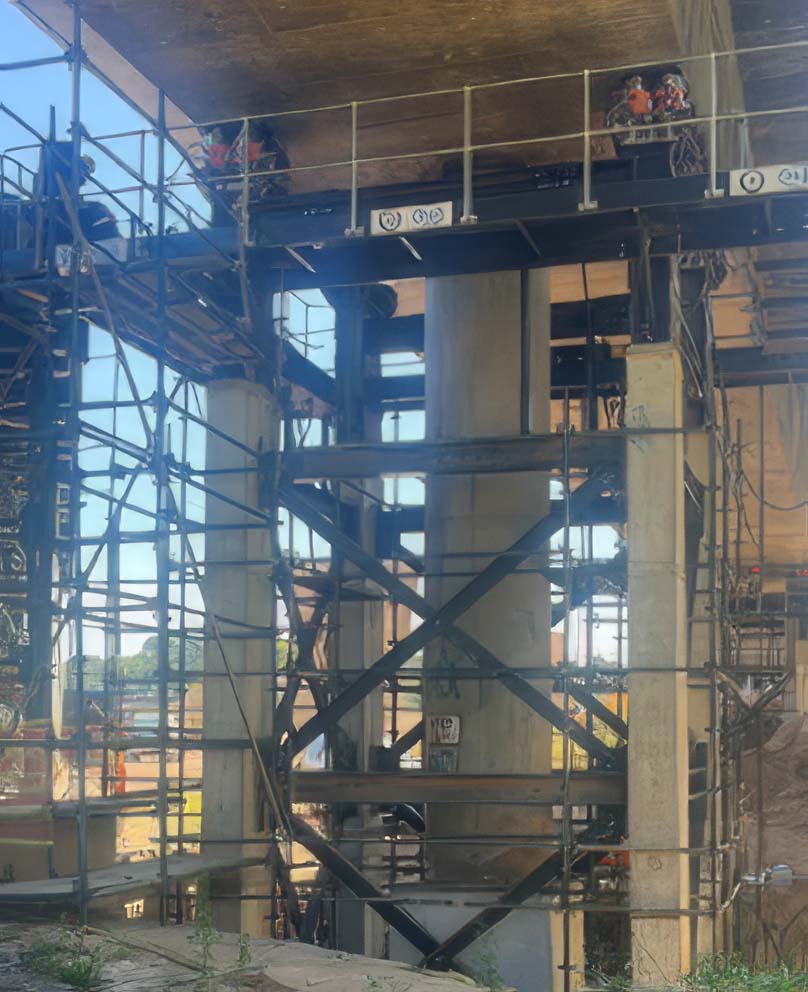
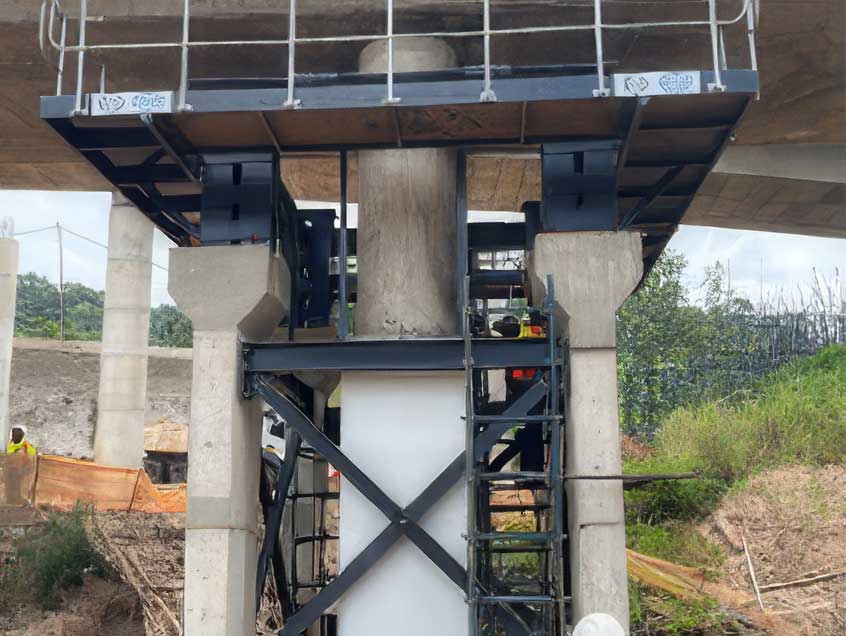
At each of the four permanent piers, a temporary works structure was erected consisting of 4x reinforced concrete columns, cross-braced with structural steel for stability, supporting a fabricated jacking platform positioned beneath the bridge soffit with steel walkway around the full perimeter to provide access to jacking positions and designed to carry required personnel and equipment for the jacking operation. This provided both vertical support and lateral stability throughout the lifting operation.
Jacking Equipment
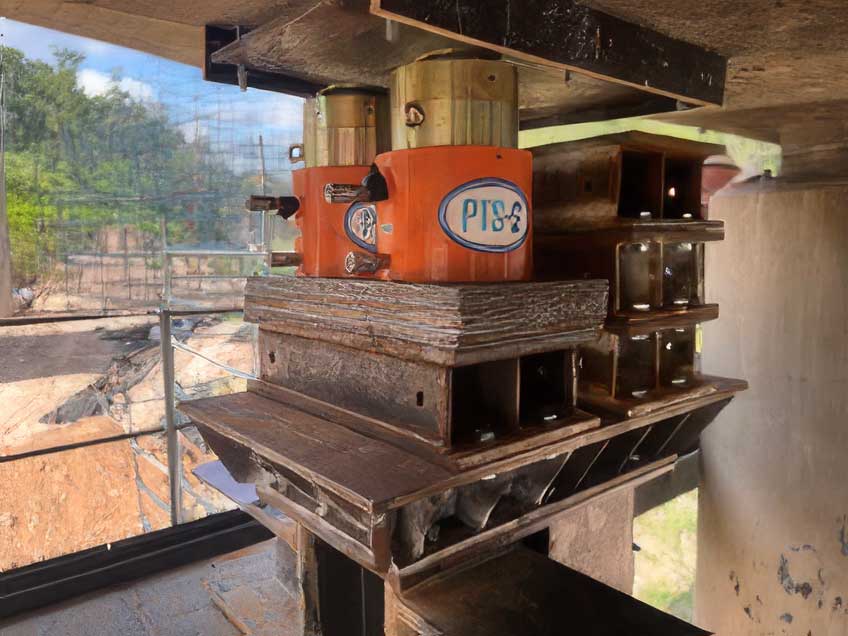
- Temporary pier positions: 2 × 250-ton hydraulic jacks with lock rings per temporary pier, providing a total lifting capacity at each permanent pier of 2000-ton, which provided sufficient capacity for controlled lifting under combined dead and live loads.
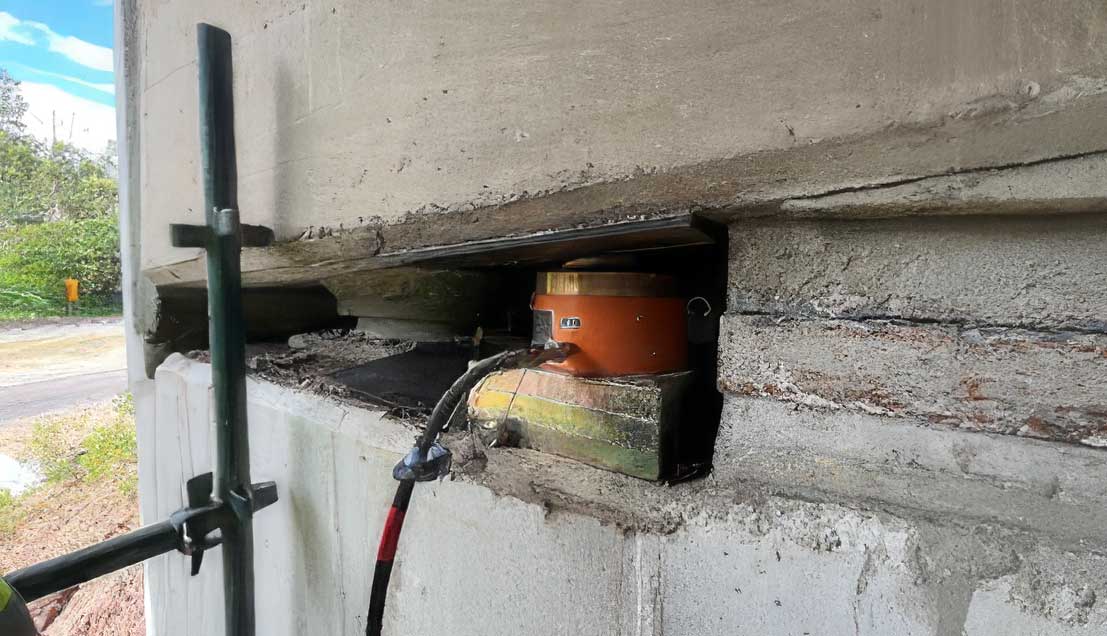
- Abutment positions: 2 x 250t low-profile hydraulic jacks with lock rings, selected to accommodate the restricted clearance between soffit and abutment face while maintaining full operational capacity.
- Steel packers installed at every support position after each lift cycle to secure the bridge and remove sustained load from the jacks.
JACKING EXECUTION & COMPLETED HEIGHT
The bridge deck was raised under live traffic conditions in controlled 10mm incremental lifts per cycle at an average rate of 60mm–90mm per day, commencing at Abutment 1 and progressing to Abutment 2, with steel packers installed after every cycle to keep the structure fully supported at all times.
Successful completed jacking height: approximately 680mm
Following completion of the lift, the bridge was secured on the temporary works system using steel packers and the hydraulic jacks released completely, allowing the Main Contractor to proceed with the permanent substructure modifications and installation of new bridge bearings. PTS-S will carry out the final lowering operation once permanent works are complete, transferring the deck onto the new permanent bearings at final design level.
PROJECT TIMELINE
Construction started: July 2025. Estimated completion: December 2026.
Sanral N.003-010-2017/9
South African National Roads Agency Limited (SANRAL)
Paradise Valley interchange, KZN
Capacity Improvements on National Route 3 Section 1 from Westville Viaduct (Km 11.80) to Paradise Valley Interchange (KM 17.50).
Aqua/EXR Joint Venture
SNA Civil & Structural Engineers
2026
Get Your Project Started Today
Ready to elevate your construction project? Contact us now for a tailored consultation or to receive a detailed quote for our specialised services.